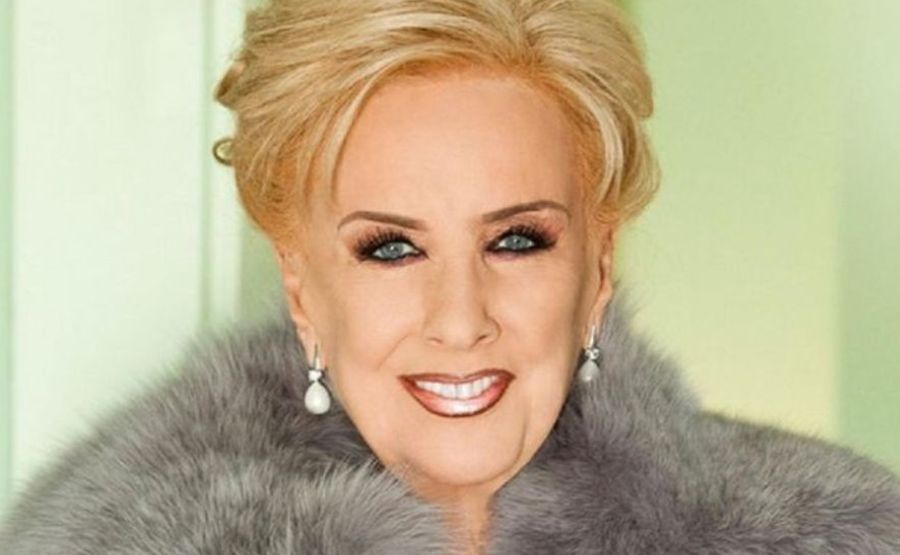
Mirtha Jung: She Was Already Engaged When She Blew Up Her Life For George Jung
Mirtha Calderón did not enter the cocaine trade by accident. She blew up an existing engagement, left the man she was supposed to marry, and chose George Jung — knowing exactly what he was. That’s not a love story. That’s a decision.
Quick Facts
| Detail | Information |
| Born | December 3, 1952, Cuba |
| Birth name | Mirtha Calderón |
| Heritage | Cuban-American |
| Known for | Ex-wife of cocaine trafficker George Jung; active participant in Medellín Cartel operations |
| Married | 1977 (George Jung) |
| Divorced | 1984 |
| Daughter | Kristina Sunshine Jung (b. August 1, 1978) |
| Prison | ~3 years, early 1980s, federal charges |
| Post-crime life | Writer, poet, entrepreneur |
| Status (2026) | 73 years old; private, whereabouts unconfirmed |
| Portrayed by | Penélope Cruz in Blow (2001) |
Cuba Doesn’t Explain Everything, But It Explains Some Things
Mirtha grew up in Cuba during the late 1950s and ’60s — which means political upheaval, economic scarcity, and a childhood where instability wasn’t a news story, it was Tuesday. Her family didn’t have money. Nobody around them really did.
She was reportedly a decent student. Math, apparently. Which is darkly funny given she’d later be elbow-deep in cartel accounting.
She eventually made it to the United States. I finished high school. I worked as a waitress. According to most reports, this is a typical path for a Cuban immigrant attempting to establish something.
Then she went to Colombia for a gathering in February 1975. And everything changed.
The Man, The Myth, The Terrible Idea
George Jung walked into that party already famous — at least to anyone connected to the cocaine pipeline running from Medellín to Miami. He was older by about a decade, American, charming in that reckless way that looks like confidence until it doesn’t.
Mirtha was 22. She was engaged to someone else.
She broke off the engagement. Choose George. Let that land for a second — this wasn’t a slow seduction. She made a clear-eyed choice to trade a safe future for a dangerous one, and she walked in eyes open.
They were together for two years before marrying in 1977. By then, George was already plugged directly into Pablo Escobar’s network, and Mirtha wasn’t watching from the sidelines. She was in it.
Not a Bystander. Let’s Be Honest About That.
The narrative around Mirtha has always been softer than it should be. “She was caught up in his world.” “She was young.” Both things can be true and still leave room for this: she participated.
Her Spanish fluency made her genuinely useful. The Medellín Cartel was a Colombian operation — having someone who could communicate directly with partners, facilitate trust, navigate cultural dynamics — that was a real asset. She wasn’t decorated.
She helped manage money. She acted as a courier. She used her connections to grease relationships between parties who needed to stay connected without being visible. The Blow movie actually got this part approximately right, which is rarer than it sounds for a Hollywood crime film.
Think about what the operation actually looked like from the inside. George’s network was pulling cocaine from Medellín, moving it north through the Caribbean, distributing it across the United States. This wasn’t a corner-store operation — at their peak, they were responsible for enormous percentages of the cocaine entering America. The money was staggering. The exposure was staggering. And Mirtha was fluent in both the language and the culture that held the supply chain together.
The cartel years meant unlimited cocaine and unlimited cash. Big houses. Constant travel. Parties that didn’t end. It reads like a fever dream now, but at the time it probably felt like the consequence was something that happened to other people.
The problem with that feeling is that it’s always wrong. Always. The only variable is timing.
Pregnant and Still Using. The Part Nobody Wants to Say Out Loud.
In 1978, Mirtha got pregnant. Kristina Sunshine Jung was born August 1st of that year — right in the middle of the peak operation years.
Here’s the part that gets glossed over in feel-good redemption arcs: Mirtha was using cocaine during her pregnancy. Doctors told her to stop. She couldn’t. That’s not a judgment, that’s what addiction does — it doesn’t care that you’re pregnant, it doesn’t care that you love your child, it just keeps going.
Kristina was born. Her parents’ world kept spinning. And within a few years, both George and Mirtha would be arrested, leaving Kristina to be raised by her grandparents. The kid who was supposed to be the reason everything got better ended up being an orphan with living parents.
The Arrest. The Three Years. The Slow Accounting.
The federal government was tightening around the cartel networks through the early 1980s. Mirtha got swept up. The charges: possession and conspiracy related to cocaine distribution. The sentence: approximately three years in federal prison.
Three years isn’t nothing. Three years is long enough to detox, to sit with what you’ve done, to have the kind of conversations with yourself that you’d been avoiding with constant stimulation and money. Prison strips the noise out. The parties, the cash, the adrenaline, the cartel connections — gone. Just walls and time and a young daughter being raised by grandparents because of choices you made.
By most accounts, prison is where Mirtha actually got clean. Not immediately, not easily, but she made the decision inside those walls and she held it. She’d still be sober over 40 years later. That is not a small thing. That is arguably the hardest thing a person can do after living the way she lived — and she did it without a book deal or a recovery memoir or a speaking circuit.
Walking out of federal prison in the early ’80s meant walking into a world that had kept moving without her. Kristina was small. George was still running. The cartel was still operating. The money that had felt infinite was, structurally, already collapsing — though nobody at the center of it would admit that yet.
She also, reportedly, made the decision about George while she was still incarcerated. She didn’t need to see the outside world to know she was done. George showed no signs of stopping. She was stopping. Those two facts couldn’t coexist.
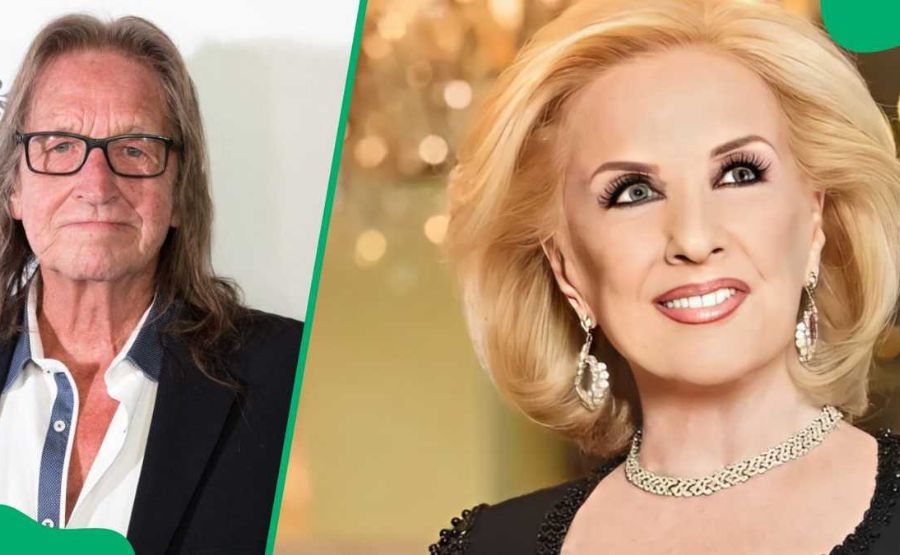
The Divorce Nobody Really Talks About
They officially divorced in 1984. Seven years of marriage, one daughter, one federal conviction each, and a cartel operation that defined an era of American drug history.
George went on to more charges, more prison, more of the same. He eventually got out in 2014 after serving nearly 20 years. He died in May 2021 in a Massachusetts hospital, reportedly still mostly broke, still occasionally making public appearances to trade on his own mythology.
Mirtha watched none of it, as far as anyone can tell. She was gone.
The Penélope Cruz Problem
Blow came out in 2001 and made George Jung into a cult figure. Johnny Depp, leather jackets, a tremendous amount of nostalgia-bait. Penélope Cruz played Mirtha.
Cruz is a fantastic actress. The portrayal is vivid, volatile, and fun to watch. It is also very much a movie version of a real human being.
Mirtha herself said — in what few interviews she gave around that time — that the film took significant creative liberties. The emotional core, she acknowledged, was real: the addiction, the chaos, the loss. The specific scenes, specific moments? Another story.
Here’s what the movie got wrong structurally: it told George’s story and put Mirtha in it. She wasn’t a supporting character in someone else’s rise and fall. She had her own arc — got arrested, got clean, rebuilt from zero, raised a daughter from a distance, slowly reconnected. That’s an entirely different movie. Nobody made it.
One brief Texas interview surfaced post-Blow and then Mirtha vanished back into private life. She understood something most people don’t: the media machine that would celebrate your redemption would also reopen every wound to get there.
She declined.
What Happened to Kristina. The Real Measure.
Kristina Sunshine Jung had the kind of childhood that produces either remarkable people or broken ones. Sometimes both. She grew up with her grandparents while both her parents were incarcerated or absent, with a father who became a crime celebrity and a mother who went quiet.
Consider what Kristina’s map of “normal” looked like growing up. Her father was a drug smuggler who became a folk hero. Her mother was the woman Penélope Cruz played in a movie. Her earliest years were spent with grandparents because both parents were legally compromised or unavailable. That’s a psychic weight most people never have to carry.
By adulthood she’d launched a clothing brand — BG Apparel — and navigated her own very strange inheritance: a famous name attached to a cocaine empire, a father who gave interviews and a mother who didn’t, and the task of figuring out who she was beyond all of it. She gave some interviews over the years. She showed up at George’s funeral in 2021 and posted about his death publicly. She clearly processed the father’s wound more visibly than the mother’s wound.
Mirtha and Kristina reportedly rebuilt their relationship. Slowly. Carefully. Without publicity. That quiet reconciliation — no book deal, no reality show, no press release — might actually be the most meaningful thing Mirtha ever did.
The cartel years made headlines. The sobriety, the rebuilding, the mothering: that happened in private. Maybe that’s exactly where it needed to happen.
Where Is She Now
Nobody fully knows. That’s not evasion — that’s the truth. Mirtha has maintained strict privacy since the early 1980s, which is now over four decades of deliberate absence from public life. She’d be 73 in 2026.
Reports mention writing and poetry. Some sources say entrepreneurial ventures, though specifics are vague to the point of meaninglessness. Her estimated net worth — somewhere between $150,000 and $1 million — is a dark comedy when you consider that at peak cartel operations, money was literally a logistical problem. You had too much of it, in cash, to safely move. Now she’s probably living modestly, somewhere in the United States, occasionally writing things that may or may not ever be published.
The internet has generated an entire ecosystem of “Mirtha Jung biography” content that is almost entirely recycled from the same five data points. Birthdate. Cuban background. George. Prison. Blow. Most of these sites have never found a primary source. They’re quoting each other in an infinite loop, passing around the same thin narrative like a relay race where nobody knows where the baton started. The irony is that the woman herself — who lived the actual story — is probably more interesting than anything the SEO content farms have produced. She’s just not talking.
George Jung died in May 2021 in a Massachusetts hospital. Whether Mirtha knew, whether she cared, whether she said anything to anyone — not part of the public record. That silence is hers and she’s entitled to it.
The woman who broke off an engagement to run cocaine with a Massachusetts charmer has apparently decided that the best ending to that story is no ending at all. Just a quiet life, somewhere, that belongs entirely to her.
You can’t really argue with that.
Final Words
Mirtha Jung’s story gets told wrong almost every time because it gets told as a footnote to George Jung’s story. She was a participant in serious crimes. She was also a woman who got clean in federal prison and spent forty-plus years building something different. Neither negates the other; both are true.
The movie made her a cautionary tale with good cheekbones. The redemption-arc biopics would make her a hero. The truth is messier and more interesting than either: a Cuban immigrant who made a catastrophically exciting choice at 22, paid for it with three years and a marriage and chunks of her daughter’s childhood, and then did the hard, unglamorous work of becoming someone else entirely.
No camera for that part. No Johnny Depp. Just the work.
FAQs
1. In 2026, will Mirtha Jung still be alive?
As of this writing, there’s no confirmed report of her death. She’d be 73. She’s maintained privacy for over 40 years so “no news” genuinely means no news.
2. Did Mirtha actually participate in the drug trade or just marry into it?
She participated. Spanish fluency made her useful in Medellín Cartel communications. She couriered, helped manage money, and facilitated connections. Not a passive bystander.
3. How realistic was Blow’s depiction of Penélope Cruz?
Emotionally approximate. Factually liberalized. It didn’t accurately depict anything, according to Mirtha herself. It’s a George Jung movie that happens to contain a version of her.
4. Did Mirtha use drugs while pregnant?
Reports consistently say yes. She was unable to stop using cocaine during her pregnancy with Kristina in 1978. It’s uncomfortable and it’s documented.
5. How long did she serve in prison?
Approximately three years, in the early 1980s, on federal cocaine-related charges.
6. What happened to her daughter Kristina?
Kristina was raised largely by her grandparents while both parents were caught up in the legal fallout. She later became an entrepreneur and reportedly reconciled with Mirtha as an adult.
7. When did Mirtha and George divorce?
Officially in 1984, seven years after marrying in 1977. She reportedly made the decision while still in prison.
8. Why did Mirtha break off her prior engagement for George Jung?
Good question. She’s never fully explained it publicly. The money, the excitement, the personality — probably all of it. She was 22. People make operatically bad decisions at 22.
9. Did George Jung ever try to reconcile with Mirtha after his release?
Nothing in the public record confirms it. George remarried (Ronda Clay Spinello) and Mirtha went dark. They seem to have led entirely separate lives post-divorce.
10. What’s Mirtha doing now?
Writing, reportedly. Poetry. Possibly some entrepreneurial work. Living privately somewhere in the United States. That’s about as specific as it gets.
11. Did Mirtha appear in the 2001 film Blow?
No. Penélope Cruz played a character based on her. Mirtha herself did not appear on screen.
12. How did Mirtha meet George?
At a gathering in Colombia in February 1975. She was already engaged to someone else at the time.
13. What was Mirtha’s net worth?
Estimates range from $150K to $1M — a fraction of what passed through their hands in the cartel years. She’s reportedly living modestly and legitimately.
14. Did Mirtha ever speak publicly after Blow came out?
Briefly. She gave at least one interview in Texas around the time of the film’s release. Then went silent again. Which, honestly, is more interesting than doing the press tour.
15. What’s the most overlooked part of her story?
Sobriety. Forty-plus years clean after being a hardcore cocaine addict during the height of the cartel era. That’s the hard part. That’s the aspect of filmmaking that doesn’t work well.
From everyday stories to extraordinary insights — Prime Narrative.